
The Supreme Court of India became "lions under the throne" when Jawaharlal Nehru brought in the fourth amendment in 1955, says T C A Srinivasa Raghavan.
'How do you deliver wealth when you don't have the slightest idea about it?' asks T C A Srinivasa Raghavan.

'It is not the country's interests alone that lead to all this secrecy.' 'More usually, the reason is the threat from political rivals: What will they do if they find out?', notes T C A Srinivasa Raghavan.
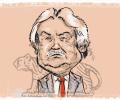
'I am sure Dr Patra will get the fullest cooperation from the finance minister who needs workhorses, not prima donnas constantly looking to improve their CVs,' says T C A Srinivasa-Raghavan.

There are 230 million vehicles on the road, and counting. Bulk of these are under seven years old and once they get older, the industry estimates the requirement for spare parts and aftersales service to shoot up sharply.
'A single seven-year term will free them from party pressures entirely,' says T C A Srinivasa Raghavan.

The unconventional music of the Nobel Laureate might have nothing connecting Indians to it, but there is a reason he has a following here, notes T C A Srinivasa Raghavan.
'The 2019 election could well become a referendum on Narendra Damodardas Modi, in which case the BJP could prove all its critics wrong,' notes T C A Srinivasa-Raghavan.
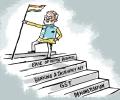
'With the big political job done, the time has come to pay attention to the economy, which is the main problem now,' argues T C A Srinivasa Raghavan.
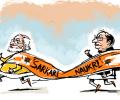
'...because of its permanent nature.' 'If you work for the private sector or for yourself, you are not regarded as being employed,' points out T C A Srinivasa Raghavan.
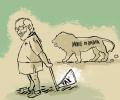
'The most important thing to do is to stop taxing citizens so brutally,' recommends T C A Srinivasa-Raghavan.
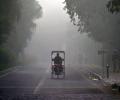
'You can't consume clean air if you won't pay for it just because it's a 30-day problem,' says T C A Srinivasa-Raghavan.
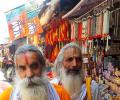
Elections are about exploiting emotions and not things like roti, kapda and makan, a very senior BJP politician tells T C A Srinivasa-Raghavan.
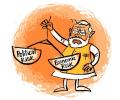
'Should the most important part of economic reform not comprise the way we look at the fiscal deficit?', asks T C A Srinivasa Raghavan.
'The CBI must become a creature of the Constitution,' argues T C A Srinivasa-Raghavan.
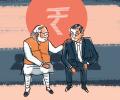
'All that Mr Modi needed to do was to call Urjit Patel over for a cup of tea and ask him nicely, and this fuss would never have happened.'

Even Subramanian Swamy, who says he is an ardent supporter of the prime minister, has been taking proxy pot shots at him.' 'At the ground level too, there is resentment from workers and local leaders who have perhaps not got whatever they may have wanted,' notes T C A Srinivasa-Raghavan.

'The Indian economy has become like a car that has the appropriate wheels on one side -- political liberalism -- and scooter wheels -- economic illiberalism -- on the other,' points out T C A Srinivasa Raghavan.
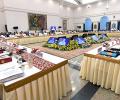
'The Constitution must reflect the reality of mature states because otherwise it is the Centre that will become irrelevant,' says T C A Srinivasa-Raghavan.
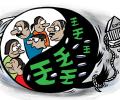
'An era of fiscal pessimism is setting in, which, if not countered intellectually, is going to have the same effect as export pessimism has had,' notes T C A Srinivasa Raghavan.
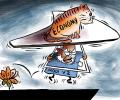
''I have been saying for the last 25 years, to no avail naturally, that the only government asset that is politically unproblematic is land,' says T C A Srinivasa Raghavan.
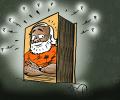
'In macroeconomic policy, timing is all, and by leaving things too late, Mr Modi may have made around 50 seats in the Lok Sabha highly vulnerable,' says T C A Srinivasa Raghavan.
'If he were to ask me, I would tell Mr Modi that the real Congress legacy he has to undo is not Nehru's social and political philosophy -- which fits India perfectly -- but his daughter's economic philosophy,' says T C A Srinivasa Raghavan.

Many important RSS people believe the 2014 result was the consequence of Hindutva and not just Modi's outstanding oratory, says T C A Srinivasa-Raghavan.

'If on the back of the resentment against the Modi government, on the very outside chance that the Congress emerges as the single largest party in May 2019, will Rahul Gandhi become prime minister?' 'Or will he do a Sonia and appoint someone else?' asks T C A Srinivasa-Raghavan.

'Mr Modi, unless he changes his approach, may further legitimise the idea that it is perfectly all right for Hindus to dictate terms to the minorities.' 'Indira Gandhi's political expediency did permanent economic damage. Mr Modi's may end up causing permanent social damage,' says T C A Srinivasa-Raghavan.

'If you keep inflation low, everything else like messing up after after demonetisation will be forgiven,' says T C A Srinivasa-Raghavan.

The RBI governor has to convert the zero-sum game with the government from a non-cooperative one -- which his two predecessors had made it -- to a cooperative one, explains T C A Srinivasa Raghavan.
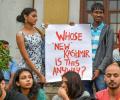
'In both places the minority was disproportionately powerful.' 'Few people acknowledge it but at its core the Tamil Nadu problem between the Brahmins and the rest was one of power.' 'In Kashmir the Hindus held most of the land and the accompanying political power, while the Muslims were the peasants and powerless,' notes T C A Srinivasa Raghavan.
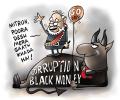
'Today the real issue facing the Modi government is not about investment, credit and money supply and all those things economists like to talk about.' 'It is whether your average citizen has confidence in the government not to do something utterly whacky,' says T C A Srinivasa-Raghavan.

A writer reveals the trick to writing a successful book.
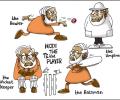
'Though coalitions, which ruled India for 25 years after 1989, are regarded as a terrible thing politically, they delivered the best economic results,' points out T C A Srinivasa-Raghavan.
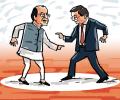
'Has the time come to devise Version 2 of ad hoc T-bills?' 'In return, the government must agree to privatise all but five or six banks.' 'If something like this is not done, we will have governments going on the rampage, with increasing frequency,' says T C A Srinivasa Raghavan.

The classic Third Year or Mid-Term Problem has afflicted all but two prime ministers who have lasted a full term, give or take a few months this way or that, points out T C A Srinivasa-Raghavan.
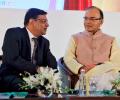
T C A Srinivasa-Raghavan recalls a tussle between the government and RBI when Rajiv Gandhi was prime minister and how it was resolved.
'Just as the BJP has been harnessing the power of religion for political purposes, Modi needs to harness the power of religious and corporate institutions for poverty alleviation,' says T C A Srinivasa-Raghavan.
'Politicians insist on focusing on the North even though the rest of India offers a better way of engaging with our Muslims namely, live and let live.'

'Whether it is a good upgrade or not is something the judges will decide on the technicalities of the process, not substance. 'But they can't do much because of the constitutional fiction they themselves propounded with their "basic structure" formulation. 'That has not been violated because Article 370 was constitutionally temporary,' says T C A Srinivasa Raghavan.

'When you ask one of the established industrialists to execute a large project it is exactly the same as your not asking your neighbourhood dhaba-owner to cater at your daughter's wedding dinner which will be attended by a thousand guests,' notes T C A Srinivasa-Raghavan.
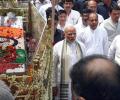
'Vajpayee would not have approved either of the way the BJP now functions or of the thoughts that it entertains in its mind,' says T C A Srinivasa-Raghavan.
